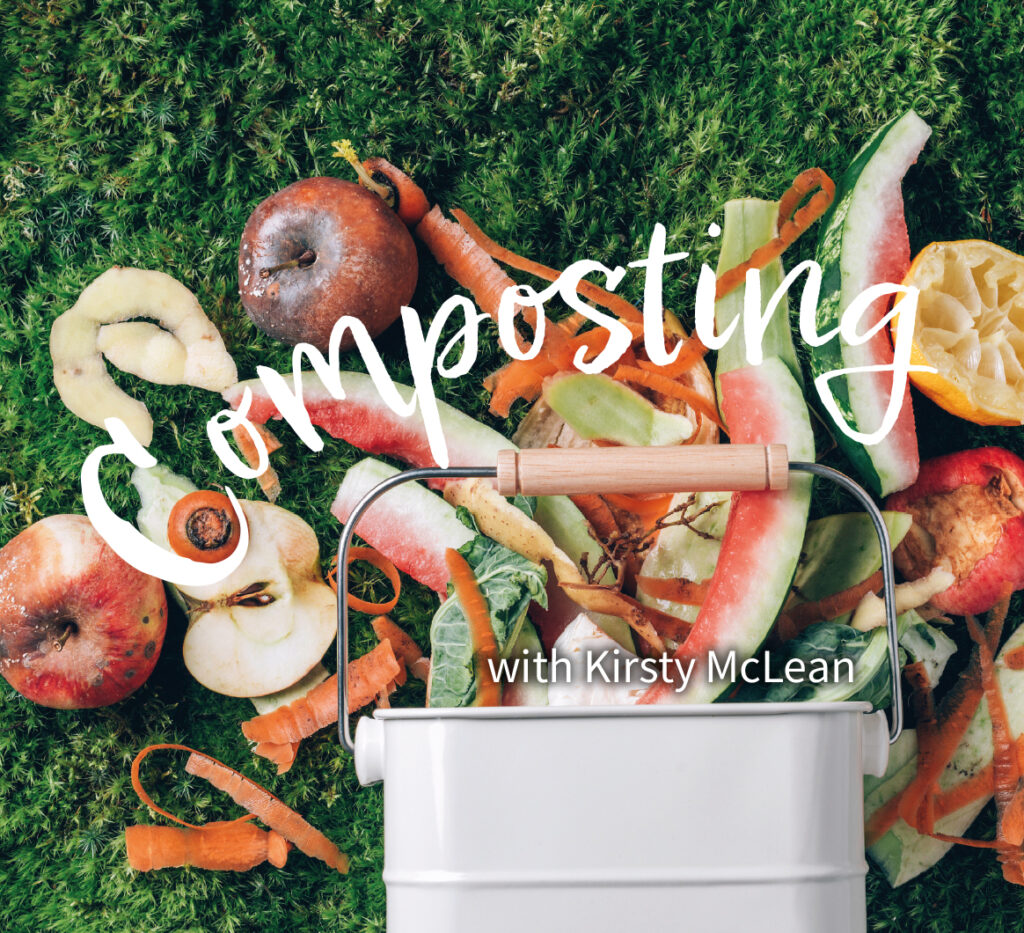
Could composting be the secret ingredient to a thriving garden? Read on to find out.
What is Compost?
Composting is the natural breakdown of organic matter, such as leaves, vegetable scraps and garden cuttings which turn into a darker, crumbly substance known as compost. It is rich in nutrients that plants enjoy and acts as a natural fertiliser to
enhance soil health.
The Secret Ingredients
Browns: Carbon-rich materials like dry leaves, twigs, shredded cardboard, and paper (not coloured or glossy). With larger leaves such as Beech, it is best to shred these first or consider making leaf mould with these separately by collecting in black bin bags (puncture the bag to let air in) or put into a wire mesh cage and let fungi break them down over one to two years.
Greens: Nitrogen-rich materials like vegetable scraps, fruit peels, coffee grounds, and fresh grass clippings.
Water: Moisture keeps the microbes alive; your pile should feel like a wrung-out sponge.
Air: Oxygen helps aerobic bacteria break down organic matter quickly without creating bad odours.
Getting started
- Find a well-drained location to position your composter (bought) or compost bay (home-made) in a place where it easy to add-in, turn and remove the decomposing/composted material.
- Layer your compost materials, starting with brown materials to ensure are circulation, followed by layers of greens and browns. Make sure that the twigs are no wider than your thumb.
- Maintain moisture levels by adding water – aim for the consistency of a wrung-out sponge
- Turn or rotate (depending on what you are using to compost in) regularly every few weeks to speed up the decomposition process and ensure good aeration.
- Monitor the temperature to ensure the centre of the compost remains warm, which is an indicator of active decomposition
What to avoid
- Meat, fish, bones, and dairy products
- Oils, grease, and fatty foods
- Pet waste (dog or cat manure)
- Cooked leftover foods
- Diseased plants or weeds with mature seed heads or clippings from Box hedging/topiary
- Treated wood or coal ash
Alternatively, if you don’t have a large outdoor space for composting you could consider Vermicomposting which fits into small indoor or outdoor bins, doesn’t need turning and is best kept at a cool room, temperature. Vermicomposting uses live composting worms like Red wigglers, who ingest food waste and convert it into worm casts which is generally richer in microbial life. This is more suitable to a modest requirement of compost, if you require bulk quantities, then regular composting is better and more cost-effective.
Whilst there may be an initial outlay for your bin (& worms if Vermicomposting), composter or bay, once in place, everything else is free. Composting is recognised as an environmentally friendly practice that not only reduces landfill waste but also enhances garden soil, promoting plant growth and will be super-rich next to a bought compost, so why not have a go!