Kirsty MacLean shares the latest trends from the garden show…
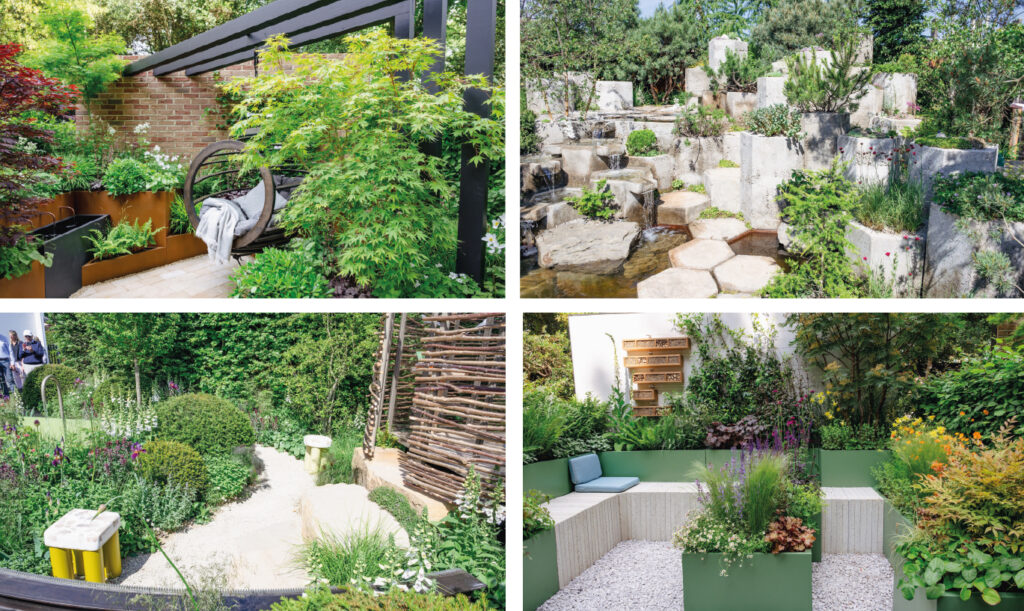
From Japanese Tea Garden to Dog Garden, Chelsea Flower Show wowed us this year with a fantastic diversity of show gardens but what struck me as a common theme was a clear trend toward more natural garden design with water, lush and informal planting. Many of the show gardens used surprising materials such as Mycelium, the root-like structure of fungi which was used to construct panels and on sculptures. Mycelium panels, created by furniture maker Sebastian Cox, are a sustainable and biodegradable material, made by inoculating wood chips with mushroom spores. In the Pathway Garden, mycelium was grown on recycled materials to create monolithic sculptures, acting as living metaphors for transformation and showcasing sustainable design.
In my own practice, whilst there are still many clients who enjoy very structured designs, I do see a greater desire to create a more natural feel, especially in the planting. Whilst there was a lot of colour at Chelsea, I’m seeing a trend toward soft, natural-coloured rattans, sage greens, timber and other organic materials. In such an unsettled world, the garden becomes a place of tranquillity.
Nature, sustainability and biodiversity are very much at the forefront of current garden design trends. Many clients are choosing eco-friendly growing practices and thinking about what promotes wildlife best and protects it. Planting choices are promoting this and the approach toward design is much more naturalistic and relaxed, generally. Choices also seem much more practical and functional, with a leaning towards edible landscaping.
There is a clear desire to create a peaceful and relaxing haven that feeds the soul and promotes good mental health and healing. The colours, whilst perhaps vibrant, are balanced by the earth tones and greater consideration toward what materials are used, with a leaning toward the use of natural fibres. It seems that many want to embrace nature as it is rather than trying to tame it and in doing so are finding the benefit of the harmony this approach brings.
I don’t think we all have to run out and plant wildflowers everywhere and never cut our grass, we need to find the balance that is right for each of us, but we can perhaps relax our approach a little and consider our priorities differently to ensure we are working in harmony with what is the most incredible, awe-inspiring, diverse, fascinating and resilient natural world, allowing ecosystems to survive and thrive in our gardens that enrich our lives and with very little effort!