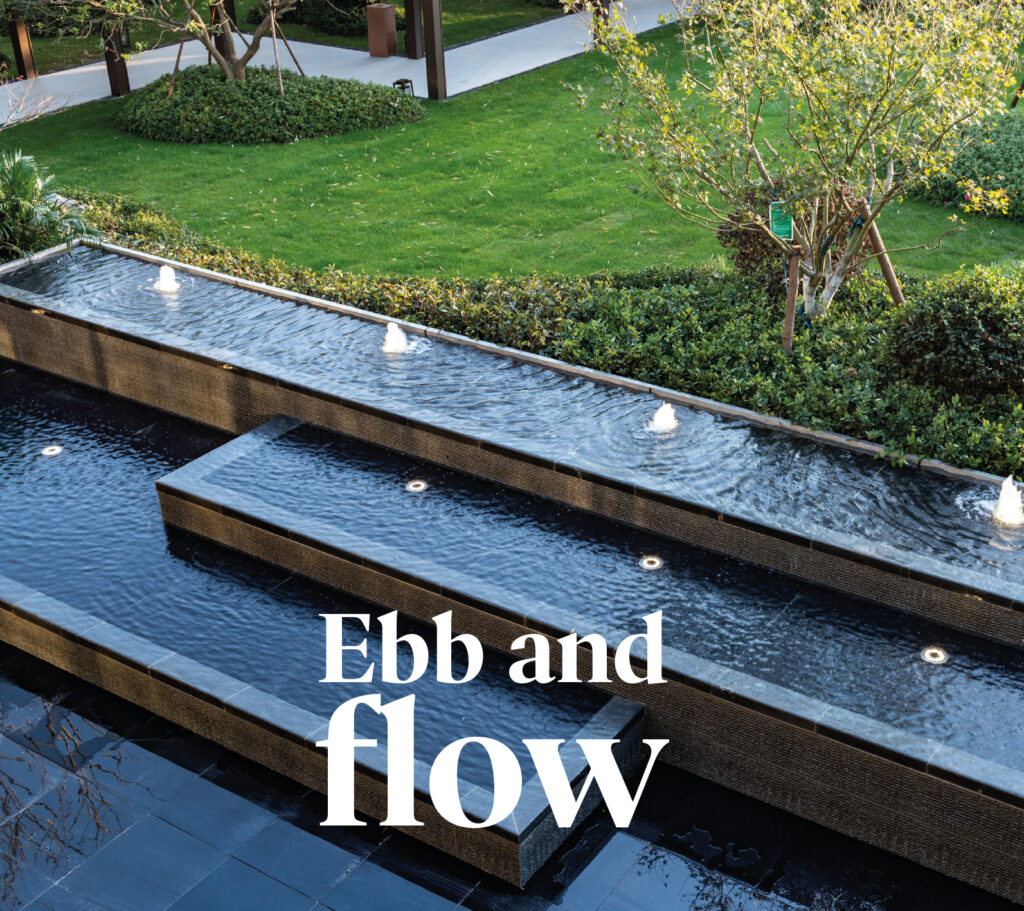
Garden Designer Kirsty McLean shares some ideas for introducing water into the garden…
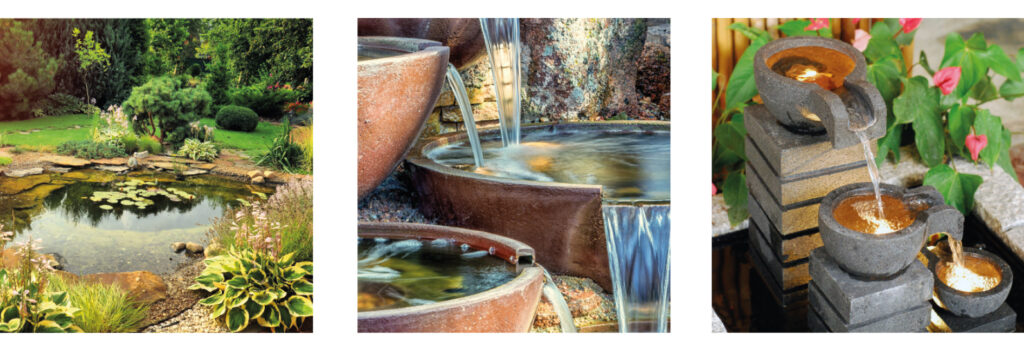
The calming and tranquil effect of water in your garden is hard to deny. Ponds, streams, waterfalls, there are so many ways to introduce water into the garden and so many benefits to be had in doing so. Aside from obvious benefits to local wildlife and biodiversity, studies suggest that negative ions from moving water help to offset the negative impacts of air pollution, reducing allergens and pollen and dampening noise pollution. Water in the garden encourages biodiversity and a healthy ecosystem at the same time as healing our over-heated minds by bringing relaxation, reflection and joy.
There’s some form of water feature for you to enjoy no matter how big or small your space is.
If you want a low-maintenance plug and play water feature, look for a recycling unit with a pump that you plug into an outdoor socket. Always make sure you read the specifications and match the requirements of the feature to the capacity of your outdoor socket. These can be as small as table-top or big enough to provide a significant waterfall. They are easily maintained, just keep free of leaves and algae and make sure you don’t leave it switched off for long periods of time or let the water stagnate as you will become at risk of Legionnaires disease. If you don’t intend keeping the water running, such as during the winter months, best drain the basin and remove the pump. There are solar options for smaller water features too!
Ponds can be as simple as a basin dug into the ground with edges disguised by pebbles, soil and planting, which will all attract wildlife. Build up one end with stone/pebbles or add a branch so that wildlife can get out! For large ponds, position in a sunny level open area, choose either a rigid or flexible liner, create shelves and different depths for a range of plants and wildlife habitat. Disguise the edges to make it look more natural. The water to fill large ponds needs to be considered along with what happens when we have long dry spells in summer and equally, if it overflows in the rainy season. With medium sized ponds, fill using rainwater whenever possible by capturing this from roofs and gutters to be directed to the pond as required. With pond planting, you have 3 bites at the cherry! Marginal planting (as the name suggests, near the edge where it’s damp) aquatic planting, these go in the pond in baskets, and floating plants.
Streams are usually about capturing water already in the garden and using gravity to direct it. Naturally flowing water is very intelligent about how it moves so rather than diverting it, for convenience, pay attention to how it moves and understand as this improves wildlife biodiversity, reducing flood risk by allowing rivers to naturally meander and store more water and enhance water quality by reconnecting to their floodplains which helps filter pollutants.
Water management in our gardens brings other benefits via Rain gardens. These are shallow depressions in the ground which collect rainwater and other surface water. They are designed to slow down the rate at which water runs off into drains, which can help prevent flooding Stay away from utility pipes, site away from tree roots, make sure the rain garden is lower than wherever it is collecting water from, choose a spot in full sun, or partial shade but not deep shade.
As you can see, there are many ways to have and manage water in your garden that provide many benefits. But if it feels too much to create in your own garden, we are fortunate here in the North of Scotland to have so many stunningly beautiful parks and gardens where we can enjoy theirs!