Garden designer Kirsty McLean shares how to update your garden…
Garden and planting design has evolved significantly over the past 25 years, moving from traditional rectangular lawns surrounded by borders to a variety of creative options. Aligning your garden design and planting style with your lifestyle, functional requirements and your values gives you the best chance of creating a garden you love, want to spend time in and take care of.
Considerations
Assess your space: Consider the size, shape and conditions of your garden (sun, shade etc), including soil type.
Identify your goals: Determine what you want from your garden – relaxation, wildlife support, food production etc.
Consider maintenance: Choose a style that matches the amount of time and effort you’re willing to invest.
Aesthetics: Think about the style of garden that appeals to you and collect ideas.
Plan for functionality: Consider how you will use the garden – entertaining, gardening, play etc.
Ecological impact: Research native and drought resilient plants that support wildlife and are environmentally friendly.
Options for garden styles include:
Naturalistic, wildlife gardens More gardeners are transitioning to plantings that mimic natural ecosystems using plants that create biodiversity, support local wildlife, focus on native plants and natural habitats. By incorporating drought-resistant planting you can also create a lower-maintenance garden that promotes resilience in a changing climate.
Prairie Style Planting If you have a bit of space, this is a style of planting that uses a mixture of grasses and flowering perennials to create a naturalistic look, inspired by grasslands of the American Midwest. Plants are typically planted in drifts or groups, which together, is ecologically beneficial. However, this isn’t necessarily a low maintenance option and requires much the same maintenance as a traditional herbaceous border.
Permaculture practices promote sustainable living by working with nature instead of against it, where eco-friendly gardening practices are employed as a priority. Reducing areas of lawn, utilising native plants to support wildlife, creating wildlife habitats. Using collected rainwater, drip irrigation or soaker hoses to reduce evaporation instead of mains water supply. Making compost from your garden waste to enrich your soil, reduce landfill waste and mulch borders. Use peat-free soil/compost and organic pest control, and research companion planting.
Gardening for Wellness The focus is on relaxation and mental health by connecting with nature, creating spaces to connect with others and for solitary contemplation by zoning through soft/green division and informal, flowing design with dense, layered and vertical planting to create a sense of quiet and calm.
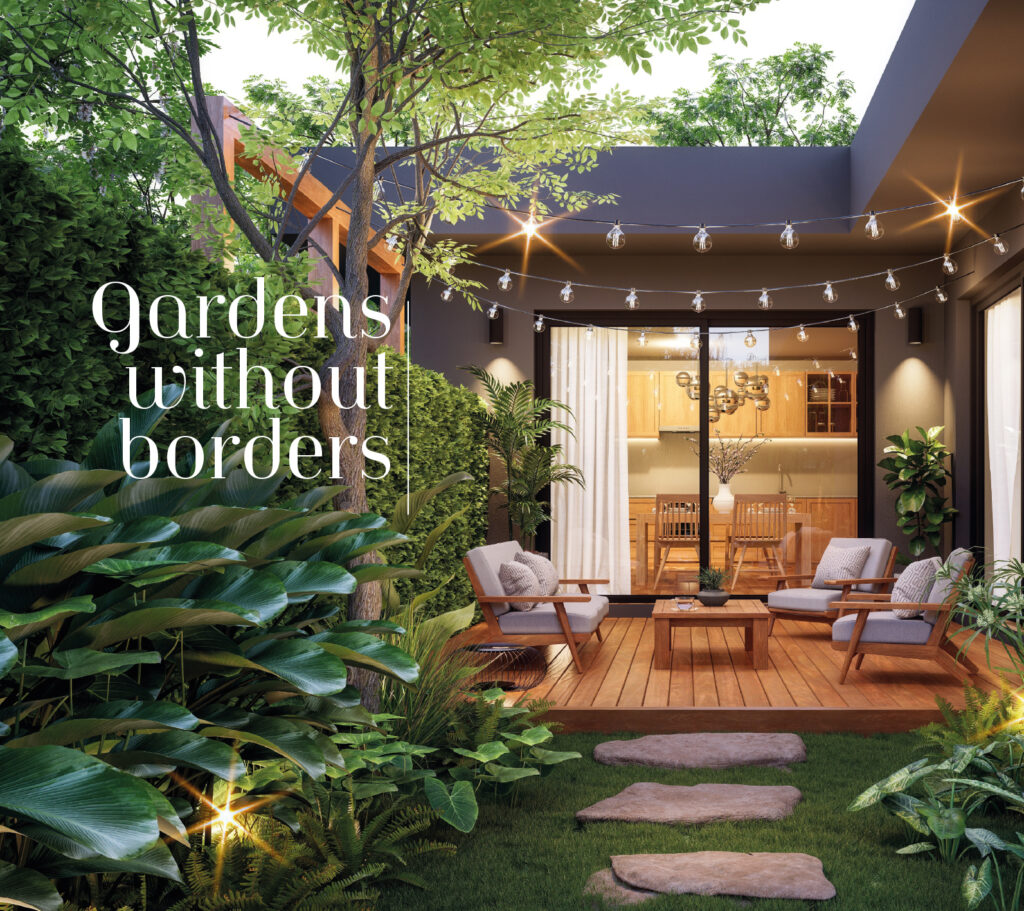
Outdoor Living Spaces for seamless inside/outside living by extending your living area into the outdoors, making the focus on social gatherings and family activities.
Ornamental Edible Gardens where growing food is the focus grown in aesthetically pleasing surroundings. Nasturtiums, herbs, fruiting shrubs and trees that flower, have berries and encourage pollinators. All of this can be achieved through creating an ornamental kitchen garden or potager, decorative
vegetable garden, raised vegetable beds, or an orchard.
Cottage Garden Traditionally, planted with a dense mix of flowers, herbs and vegetables growing abundantly together, creating a joyous and informal atmosphere. Because the style is so informal, borders don’t need to be meticulously maintained. Choosing plants that require less water, and mulching borders make it more sustainable.
Horti-futurism has been trending throughout 2024, exploring futuristic gardening techniques to enhance garden health and production, challenging the traditional components of a garden – lawn, patios, borders – and looks to address the most urgent issues of our time, the effects of environmental and climatic conditions and the biodiversity crisis.
Whatever you choose – love your garden!