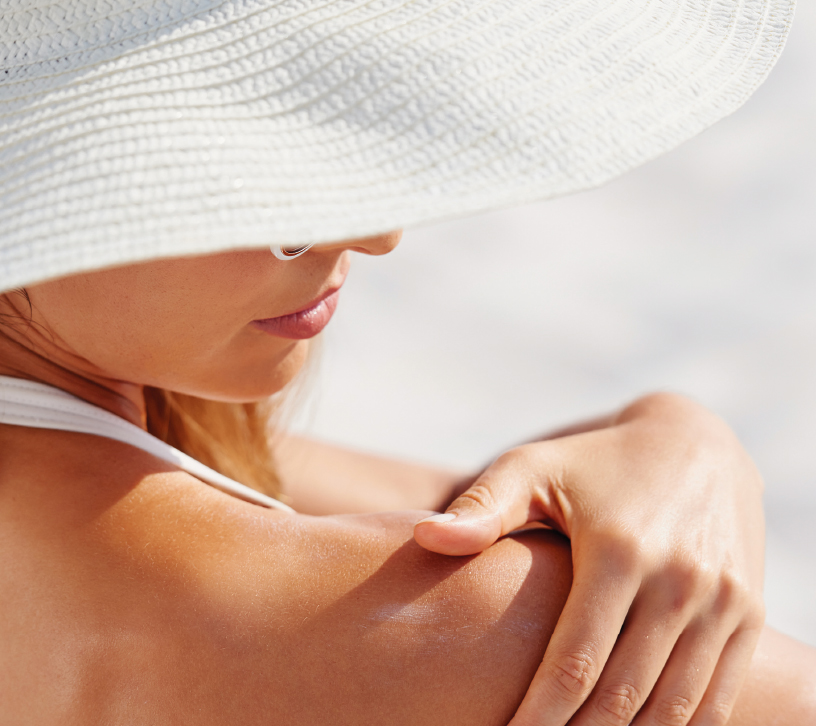
Here comes the sun
Ah, the sun! It’s a fine balance between healthy, radiant skin as you bask in the warming rays and looking like a disgruntled raisin if you overdo it…
Accumulated exposure to UVA and UVB radiation in sunlight can cause changes in the skin which make us look older. It’s called photoaging and we needn’t burn to damage our skin. It’s perfectly possible to experience the symptoms of photoaging in the grey Granite City.
Typically, photo aging means we develop wrinkles, dark spots of pigmentation sometimes known as liver spots or age spots and drooping, inelastic skin. In some cases, if we’ve spent decades lying on sun lounger, the skin becomes leathery or develops a yellowish tinge. We can also develop little patches of broken capillaries or even skin cancer.
The natural response is to reach for the sun tan lotion, but a recent study by Which Magazine showed that several well-known brands fail to deliver the level of protection claimed and failed their tests. Conversely, bargain buys from Aldi and Lidl performed well.
Dr. Siobhan of the Terrace Aesthetic Clinic advised, ‘Prevention is definitely better than cure. I recommend an SPF50 to avoid sun damage. Your foundation or tinted moisturiser may include an SPF rating, but it’s almost certainly not as good as a dedicated product which will last all day. In part this is because it’s important to protect areas of the skin that are exposed to UVA and UVB radiation like the hands, neck, tops of the ears, chest, arms and legs where we don’t wear foundation.’
Marina Mackay of Aesthetic Beauty Inverurie added, ‘It’s particularly important to ensure you’re well-protected if you have light, fair skin, spend a lot of time outdoors either for work or leisure or are older, as you may be more susceptible to photoaging.’
‘If you do have the signs and symptoms of photoaging, there are treatment options that will help reverse the damage. That said even where the skin already shows signs of photoaging, it makes sense to wear an SPF of at least 30 for 4-5 hours in daylight. Wide-brimmed hats and sunglasses and staying in the shade can also help reduce further damage.
‘Brightening products can help reduce and remove pigmentation, but it can take several months of application before you see a real difference. A chemical peel will help resurface the skin if you need a faster result. Laser treatments and Dermapen microneeding are the gold standard for rejuvenating the skin and tackle a wide range of skin issues as well as photoaging.’
Your dermatologist or qualified aesthetics specialist may be able to offer medical grade skincare products that include retinol or Retin A. These are more concentrated than over the counter brands and you may need to start with a weaker percentage of active product then build up to a prescribed product to avoid skin irritation. It may take several months of diligent use, but they do reduce wrinkles over time.
Perhaps it’s time to invest in a big floppy hat!